why has spiral-wound pipe rehabilitation equipment become a critical necessity?

 EN
 Русский
 简体中文
 Árabe
 Español
 Français
 Deutsch
 Português
 日本語
 한국어
 हिंदी
 Prancis
 Türkçe
 Tiếng Việt
 Italiano
 ไทย

NEWS
why has spiral-wound pipe rehabilitation equipment become a critical necessity?
Urban underground utility networks are entering the “15th Five-Year Plan” renewal cycle: why has spiral-wound pipe rehabilitation equipment become a critical necessity?
Industry Watch · Trenchless Rehabilitation Equipment
2026 November
Introduction: A 700,000-kilometer race track is reshaping equipment demand.
2025 In October, while interpreting the 15th Five-Year Plan, the National Development and Reform Commission released a set of figures: over the next five years, more than 700,000 kilometers of urban underground utility networks nationwide will be constructed or upgraded, requiring additional investment exceeding 5 trillion yuan. This scale indicates that China’s infrastructure‑building focus is shifting from “new construction” to “renovation”—a large number of concrete pipes and brick‑masonry trench channels laid in the 1980s and 1990s have now entered a period of heightened structural deterioration.
The difficulty of upgrades lies not in money, but on the ground. Beneath urban arterial roads run gas, electricity, telecommunications, and water lines; excavating one kilometer of pavement involves traffic management, dust control, noise mitigation, and coordinating the relocation of an entire network of utilities. Consequently, trenchless rehabilitation has shifted from a “contingency plan” to the “default approach,” and within this technological pathway,Mechanical spiral winding methodBecause it can handle large-diameter pipes, operate underwater, and access box culverts, it has become one of the fastest-growing construction methods in recent years.
Equipment is the real threshold for whether this process can be successfully implemented.
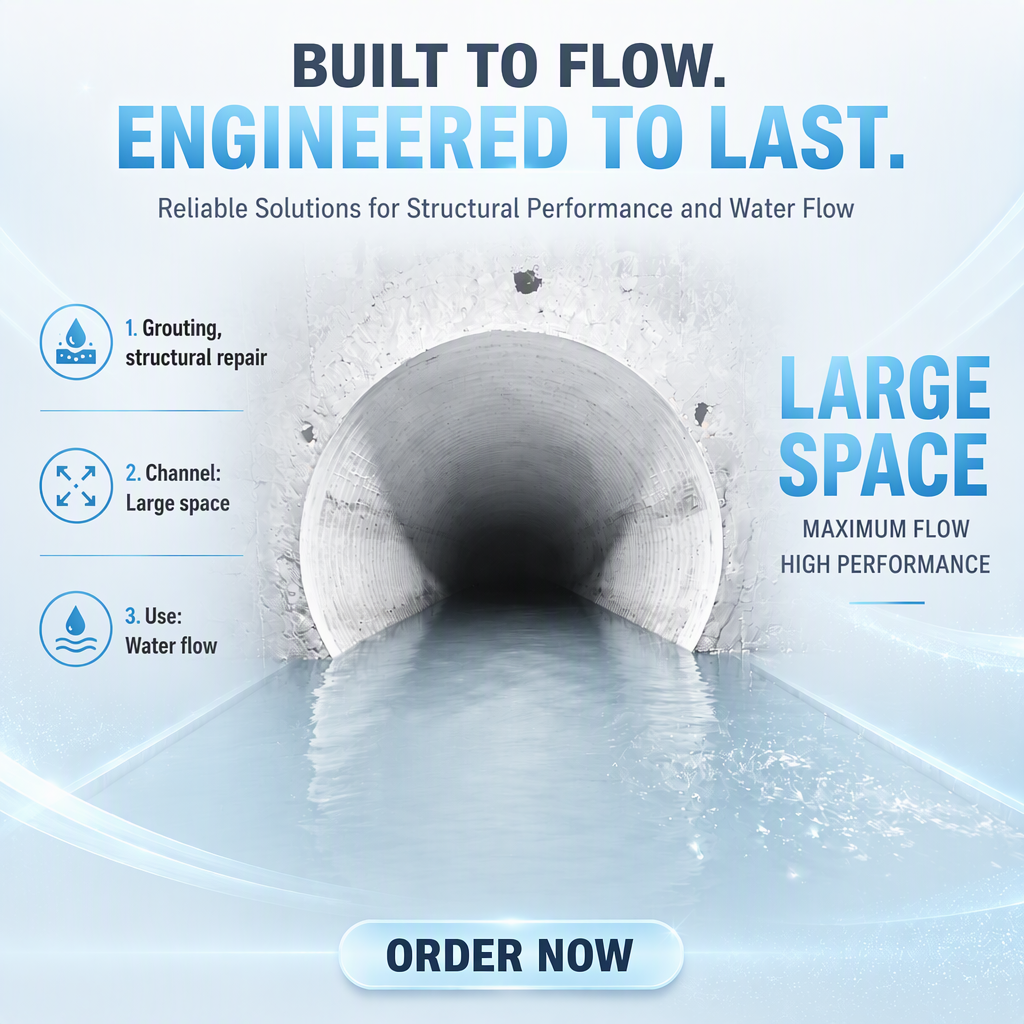
I. Technical Principle: A new pipe “grows” inside the old pipe.
The logic of the spiral winding method is entirely different from that of CIPP (cured-in-place pipe). CIPP involves pulling a resin-impregnated liner into the existing pipe, inflating it to press against the pipe wall, and then curing it—essentially “applying a shell.” Spiral winding, on the other hand, is…In-situ pipe fabrication within the existing conduit.
Factory‑prefabricated strip profiles (domestically, typically PVC‑U base material with embedded steel reinforcement) are fed into a winding machine installed inside the inspection chamber. The winding machine rotates, advancing the profiles in a spiral fashion deeper into the pipeline; under the action of a clamping mechanism, the male and female interlocking edges on either side of the profile engage, forming a continuous, self‑supporting circular new pipe. After winding is complete, cement slurry or epoxy grout is injected into the annular gap between the new and existing pipes, allowing the new and old pipes to share the load.
Three key factors determine the scope of applicability for this process:
· Profiles are structural components, not thin films. The wall thickness is typically on the order of a few millimeters to slightly more than ten millimeters. Combined with steel‑belt reinforcement, this approach enables “full structural rehabilitation”: the new pipe independently bears external earth pressure and vehicular loads, without relying solely on the residual strength of the existing pipe.
· It can be advanced with water. In general, when the water level in the pipe does not exceed 30% of the pipe diameter, the equipment can still perform normal winding; this is a decisive advantage during the rainy season, in combined sewer systems, and on main lines where complete flow interruption is not feasible.
· The inner wall is smooth. The Manning roughness coefficient for PVC-U-lined pipes is approximately 0.009–0.010, which is significantly better than the 0.013–0.014 of bare concrete pipes. Even though the flow cross-section is reduced due to the liner’s wall thickness, hydraulic recalculations often show that the pipe can still meet or even exceed the original design discharge.
Of course, the trade-offs are clear: the flow cross-section will inevitably be reduced, requiring a new hydraulic calculation based on the design wall thickness; pressure pipelines are not covered by this approach; and if the existing pipe is already severely deformed, misaligned, or collapsed, localized pre‑treatment must be carried out first.
II. Equipment Disassembly: A winding machine consists of six systems.
In the industry, when people refer to “spiral winding equipment,” they usually mean the main machine inside the well, but what truly determines construction stability is the entire system. Broken down, it generally consists of six components:
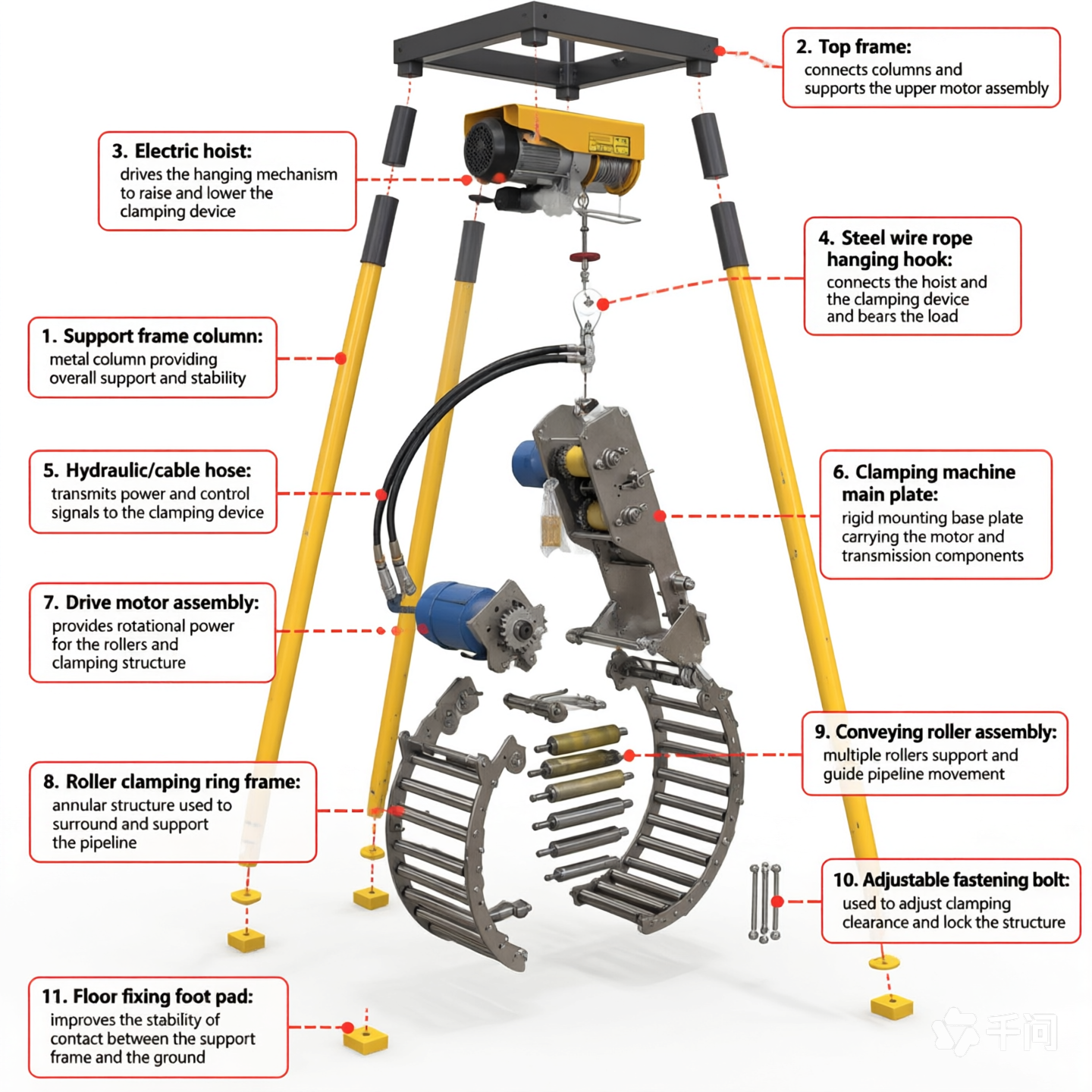
1. Wrapping host
The rotating winding head, the forming guide ring, and the clamping and locking mechanism are the core components. Its task is not simply to rotate, but to maintain a constant pitch and consistent clamping force during advancement, ensuring that each turn of the lock engages properly. Poor engagement of the locks is the primary cause of subsequent leakage and structural failure.
2. Profile Feeding and Pre-straightening System
Feed rack, guide wheel assembly, and tension control unit. The profile enters the tube through a well from the ground, with multiple bends along its path; without pre-straightening and a closed-loop tension system, the profile will enter the forming zone twisted and bent, directly resulting in helical misalignment.
3. Rack, Support, and Centering Device
Adjustable support feet secure the main unit inside the inspection chamber and center it. With well diameters, depths, and wall conditions varying widely, this component may seem the least technically demanding, yet it has the greatest impact on the time required for initial installation.
4. Power and Hydraulic Unit
The slewing drive, travel drive, clamping cylinder, and cutting mechanism all draw power from here. In the confined underground space with poor heat dissipation, controlling the hydraulic system’s temperature rise is a practical constraint on continuous operating time.
5. Control system
Modern models come standard with a PLC, variable-frequency drive, and a multi-sensor closed-loop system that monitors torque, advancement displacement, winding turns, tension, and hydraulic pressure. The operator sets the pipe diameter and profile specifications on the wellhead HMI; the system automatically matches rotational speed and advance rate according to the preset recipe and records all process parameters—this documentation is now becoming part of the project acceptance dossier.
6. Monitoring and Assistance
Explosion-proof underground lighting, real-time CCTV transmission, and intercom; on the surface side,配备 a generator, winch, profile cutting tools, grouting pump, sealing and diversion equipment, as well as gas detection and ventilation required for confined space operations.
The competitiveness of a system no longer hinges on whether it can “wrap around,” but rather on whether these six elements can work together stably:Whether the installation is fast or slow, whether the parameters are stable, and whether the data can be retained.
III. Three models, each corresponding to a completely different operating condition.
Common spiral winding equipment on the market can be divided into three categories based on operating mode; choosing the wrong model is more critical than choosing the wrong brand.
Model | Typical application | Advantages | Main limitations |
Intramedullary fixation | DN300–DN1500 Circular Drainage Pipe | Simple structure, good rigidity, low unit cost, and high winding accuracy | Limited by the dimensions of inspection wells; requires multiple relocations when well spacing is large; cannot enter box culverts. |
Crawling type (self-propelled) | Large-diameter pipes, box culverts, rectangular channels, and irregular cross-sections with diameters of DN1200 and above | It can penetrate well-free sections and handle square and arched cross-sections. | The equipment is complex, expensive, and sensitive to obstructions and sedimentation inside the pipeline. |
For Box Culverts/Channels Only | Culverts, underground channels, and drainage ditches | Can be constructed as an “inner square tube,” restoring the structure while preserving the flow cross-section. | The cross-sections are highly customized, have poor versatility, and must be designed on a project-by-project basis. |
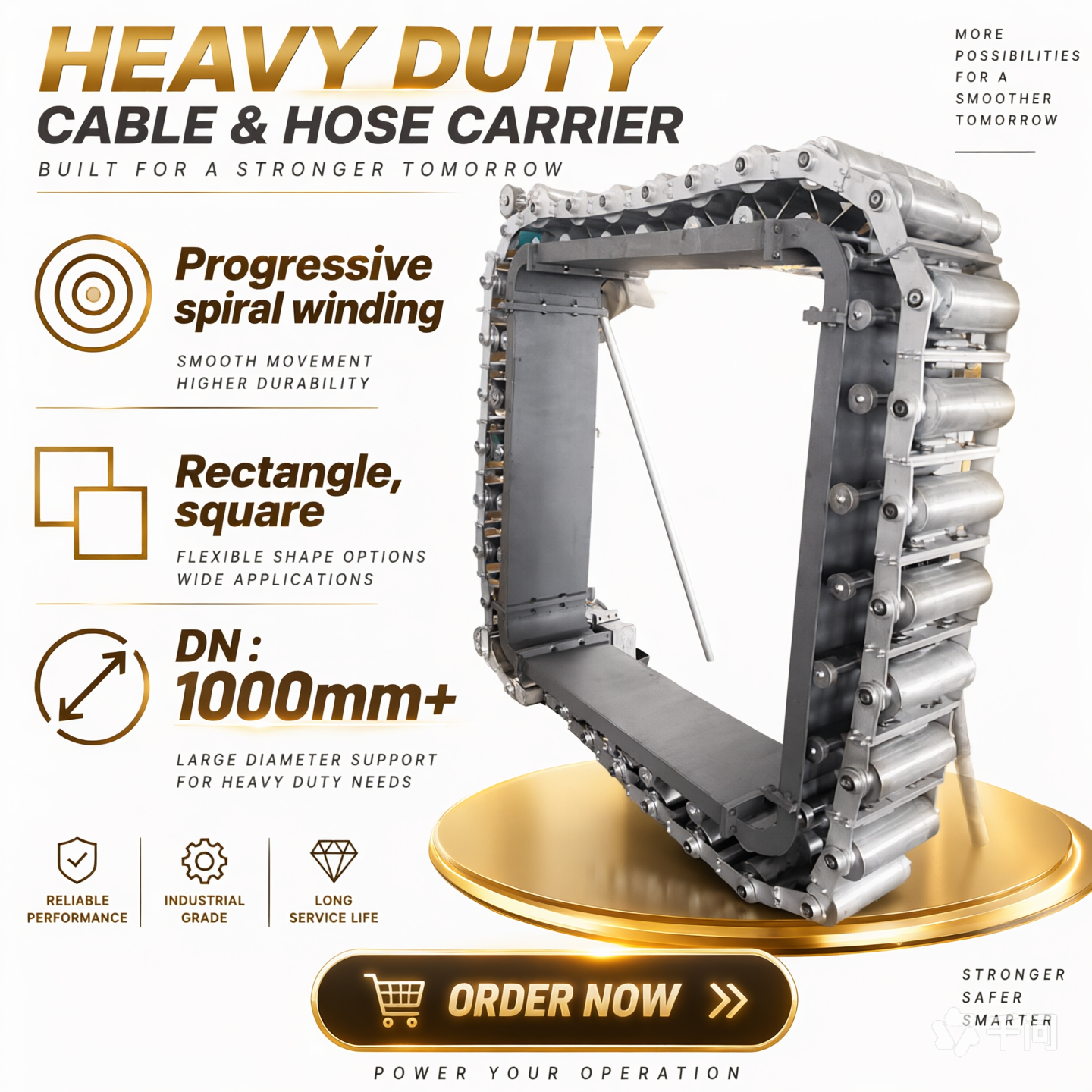
A common misjudgment is: using in-well fixed equipment to tackle a box culvert project, only to find on site that the equipment simply cannot fit; or employing crawler-type equipment for a small DN400 pipe, resulting in such a high per-meter cost that bidding becomes impossible. The first step in equipment selection is not to ask about price, but rather to first…Pipe diameter, cross-sectional shape, manhole spacing, water level, defect severity gradeMake sure these five parameters are clearly confirmed.
IV. Construction Process: Eight Steps from CCTV Inspection to Water-Tightness Acceptance
Helical winding is a process where success hinges on the initial stage. The standardized procedure comprises roughly eight steps (inspection and assessment follow CJJ 181; repair design and construction adhere to CJJ/T 210 and local standards, such as Shanghai DG/TJ 08-2354):
1. CCTV / Sonar Inspection and Defect Assessment: Determine the defect type, severity, and location, and assess whether lining conditions are met.
2. Dredging, Plugging, and Diversion: Remove the sediment inside the pipe until the equipment can pass through, and lower the water level to a workable range.
3. Installation of well equipment and cutting of profiles: Host positioning, centering, profile feeding, and parameter calibration.
4. Try wrapping: First perform a short-distance trial winding to verify the lock engagement, pitch, and roundness, then proceed continuously.
5. Continuous winding propulsion: Operate according to calibrated parameters, recording torque, tension, and displacement throughout the process.
6. End treatment and branch connection: The wellhead end is edge-sealed, and the branch pipe is cut on-site and sealed—this is the most common location for leaks.
7. Annular Gap GroutingGrouting is used to fill the space between the old and new pipes; the grout mix ratio and injection pressure must be carefully controlled, as excessive pressure can deform the new pipe.
8. Water/Air Tightness Test + CCTV Final Inspection: After passing inspection, backfill the manhole and restore the road surface.
Among the eight stages, it is often not Step 5 but Steps 1, 2, and 6 that truly affect the project timeline. Rework caused by inadequate preliminary inspections accounts for the majority of on-site issues.
5. Compared with CIPP and excavation-based pipe replacement, where exactly does it have the advantage?
Dimension | Mechanical spiral winding | UV-CIPP Ultraviolet Curing | Excavation and pipe replacement |
Applicable pipe diameter | Primarily medium to large diameters, with coverage extending to extra-large sizes. | Small and medium diameters are mainstream. | Unlimited |
Is it necessary to cut off the flow? | Can operate with water (water level approximately ≤30% of pipe diameter) | Generally requires flow interruption and bypass. | The flow must be stopped. |
Fang Han / Irregular Cross-Section | Available (for dedicated models) | Hard to adapt | Feasible but requires extensive excavation. |
Head loss due to flow cross-section | More obvious; hydraulic verification is required. | smaller | None |
Structural Performance | It can achieve a fully structured, independently load-bearing design. | Primarily semi-structured, relying on the original pipeline. | Brand-new pipe |
Ground interference | Wellsite Operations Only | Wellsite Operations Only | Road excavation, traffic diversion, and utility relocation |
Total construction cost | middle | Low–Medium | High (urban arterial road scene) |
The most important conclusion of this table is:No single process works for everything. On busy urban arterials with dense utility networks where traffic cannot be interrupted, spiral winding offers the best cost-effectiveness; for branch pipe networks with diameters of DN300–DN600 and scenarios requiring rapid, large-scale construction, UV-CIPP is more efficient; and in areas with shallow burial depths, open excavation is actually the most economical when there are no utility conflicts.
A truly professional solution integrates three different technologies on the same pipeline network map, rather than applying a single method across the entire city.
VI. Five Questions to Ask When Selecting Equipment
Equipment procurement isn’t about buying a single machine; it’s about acquiring a complete production system capable of consistently delivering finished products. The following five questions reveal more about the true value than any price quote:
9. Are the profiles manufactured in-house or purchased externally? The precision of the profile’s locking mechanism and the uniformity of the steel strip directly determine the repair quality. When equipment and profiles are supplied separately, responsibility for coordination at the interface can easily become a source of dispute.
10. Are tension and pitch controlled in a closed loop? Open-loop equipment relies on the operator’s experience, so quality varies with personnel; closed-loop equipment can lock process parameters into a recipe.
11. Can the data be exported? Building owners are increasingly demanding traceability throughout the construction process. Equipment capable of exporting torque, displacement, and turn‑count curves is a significant advantage during inspection and final settlement.
12. What is the response radius for spare parts and services? If downhole equipment gets stuck in the pipe, it can halt construction across an entire street. Be sure to confirm lead times for spare parts such as hydraulic components, seals, and locking‑wheel assemblies.
13. Can it handle the typical operating conditions of your city? High water levels in the south, large diameters in the north, brick-lined rectangular channels in old urban areas, and corrosive wastewater in industrial zones—each operating condition places different demands on equipment, making prototype testing more reliable than relying solely on parameter tables.
Cost benchmarks must also be standardized: we can’t just compare unit equipment prices; we need to factor in all costs.Comprehensive cost per meter— Equipment depreciation + profiles + labor + relocation + rework rate. A 3-percentage-point difference in the rework rate is enough to offset the entire price gap of the equipment.
VII. Four Ongoing Technological Trends
Trend 1: The capability for both wet and non-stop water operations continues to expand.
During the rainy season, urban combined sewer systems cannot be completely shut down. Whoever can lower the operational water level and devise a more streamlined diversion plan will secure the most challenging—and most expensive—contract packages.
Trend 2: From circular pipes to square culverts.
In the early stages of pipeline network construction, numerous slab culverts and brick-built rectangular channels are still in service today; their irregular cross-sectional shapes cannot be handled by standard circular pipe equipment. Crawling robots and custom-designed machines for these specific cross sections represent the most certain growth segments in the coming years.
Trend 3: Parametric Delivery.
The quality of helical winding is highly dependent on process parameters. Turning torque, tension, pitch, and grouting pressure into exportable, traceable data packages is shifting from a “selling point” to a “bidding threshold.”
Trend Four: Equipment Going Global.
Many urban pipe networks in Southeast Asia, the Middle East, and Latin America are also aging, while local markets lack complete sets of equipment and skilled construction teams. Offering bundled solutions that include equipment, profiles, and construction training is a more sustainable approach for domestic manufacturers than simply selling machinery.

Conclusion
The 700,000-kilometer pipeline network upgrade planned for the Fifteenth Five-Year Plan will not be evenly distributed across every company’s order book. Instead, it will be more concentrated among those thatCapable of handling complex operating conditions, providing process data, and controlling per-meter costs.The team.
The distinctive feature of helical winding equipment is that it transforms a problem traditionally classified as “civil engineering” into one involving “equipment + materials + process parameters.” This means the industry’s competitive threshold is shifting from “whether one has the necessary qualifications” to “whether one possesses stable process capabilities.”
For equipment manufacturers, this is an opportunity to shift from selling machines to selling delivery capabilities; for construction firms, it is a chance to turn experience into parameters and projects into standardized products. Beneath the visible surface, a quiet yet tangible industrial upgrade is underway.
References and Notes
14. The National Development and Reform Commission’s statement on the scale of construction and renovation of urban underground utility networks and investment requirements during the 15th Five-Year Plan period, October 2025 (according to public reports from Sina Finance and others).
15. CJJ/T 210-2014 Technical Specification for Trenchless Rehabilitation and Renewal of Urban Drainage Pipelines.
16. CJJ 181-2012 Technical Code for Inspection and Assessment of Urban Drainage Pipelines.
17. DG/TJ 08-2354-2021 “Technical Standard for Trenchless Rehabilitation of Urban Drainage Pipelines” (Shanghai).
18. The pipe diameter range, wall thickness, roughness coefficient, and operable water level specified in this document are industry-standard ranges; for any specific project, the design documents and the equipment manufacturer’s technical agreement shall prevail.
Online message
-
Contact Us
Xinjiang Road, Beiguan Industrial Park, Jiaozhou City, Qingdao, Shandong Province -
Products
ONLINE MESSAGE

